
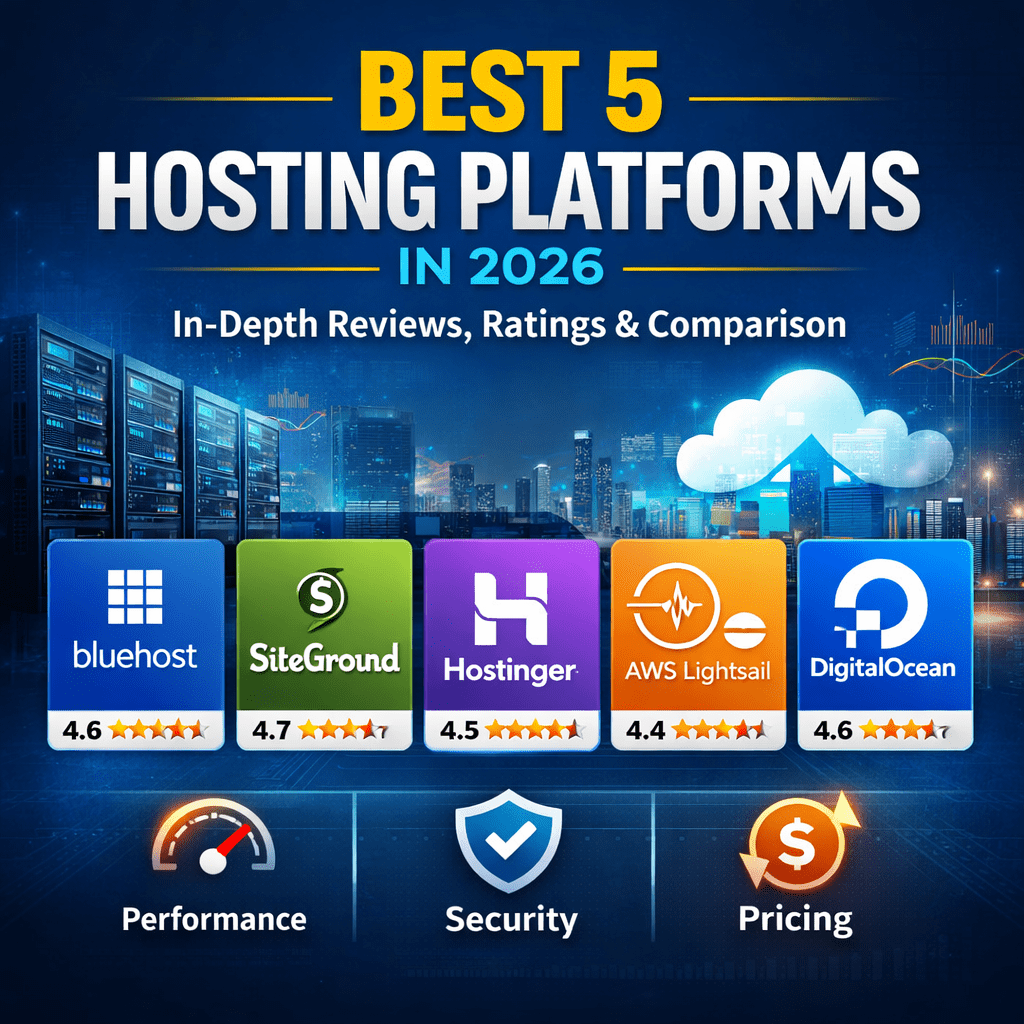
Best 5 Hosting Platforms in 2026 – In-Depth Reviews, Ratings & Comparison
Choosing the right web hosting platform is one of the most important decisions you’ll make when building a website. Hosting affects everything – site speed, uptime, SEO rankings, security, scalability, and even revenue. A slow or unreliable host can cost you visitors and trust, while a good one quietly powers your growth in the background.
In this detailed guide, I review the five best hosting platforms used by bloggers, businesses, SaaS founders, and developers. Each platform is evaluated on performance, ease of use, pricing, scalability, and real-world reliability, so you can confidently pick the one that fits your needs.
1.) Bluehost – Best for Beginners & New Websites
Bluehost is one of the most beginner-friendly hosting platforms on the market and is officially recommended for WordPress beginners. If you’re launching your first blog, portfolio, or small business website, Bluehost makes the process extremely simple.
Key Features
- One-click WordPress installation
- Free domain for the first year
- Free SSL certificate
- Easy-to-use control panel
- 24/7 customer support
Real-World Experience
Bluehost shines in simplicity. From domain registration to WordPress setup, everything is streamlined. Performance is solid for small to medium sites, and uptime is reliable for daily traffic needs.
Pros
✔ Beginner-friendly interface
✔ Affordable starting plans
✔ Good WordPress integration
Cons
✖ Renewal prices are higher
✖ Performance not ideal for heavy traffic
Best For
- Beginners
- Bloggers
- Small business websites
Verdict: Bluehost is a great entry-level hosting solution that balances affordability and ease of use.
2.) SiteGround – Best Managed Hosting for WordPress
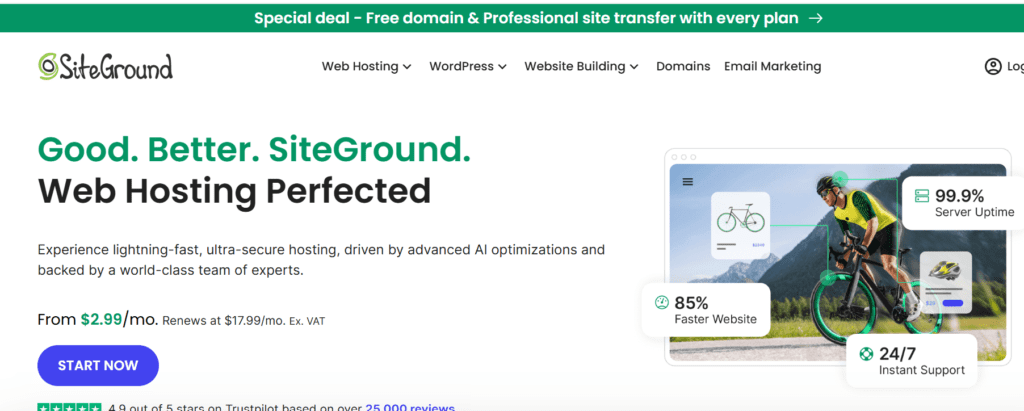
SiteGround is known for excellent performance, security, and customer support, making it a favorite among professionals and growing businesses. While it costs more than entry-level hosts, the quality justifies the price.
Key Features
- Google Cloud infrastructure
- Advanced caching & CDN
- Daily backups
- Strong security features
- Outstanding customer support
Real-World Experience
Sites hosted on SiteGround load noticeably faster, especially WordPress sites. Their support team is highly responsive and knowledgeable, which is invaluable when running revenue-generating websites.
Pros
✔ Excellent speed and uptime
✔ Top-tier support
✔ Strong security
Cons
✖ Higher pricing
✖ Limited storage on lower plans
Best For
- WordPress users
- Business websites
- High-traffic blogs
Verdict: If performance and reliability matter more than the lowest price, SiteGround is a top choice.
3.) Hostinger – Best Budget Hosting with Strong Performance
Hostinger has built a reputation for delivering impressive performance at very affordable prices. It’s ideal for users who want speed and reliability without spending too much.
Key Features
- LiteSpeed servers
- Free SSL and email
- Custom hPanel (easy to use)
- Global data centers
- Affordable long-term plans
Real-World Experience
Despite its low cost, Hostinger performs surprisingly well. Pages load fast, uptime is stable, and the interface is clean and beginner-friendly.
Pros
✔ Excellent value for money
✔ Fast loading speeds
✔ Simple interface
Cons
✖ Limited resources on entry plans
✖ No phone support
Best For
- Budget-conscious users
- Affiliate sites
- Small to medium websites
Verdict: Hostinger offers one of the best price-to-performance ratios in shared hosting.
4.) AWS Lightsail – Best Entry-Level Cloud Hosting
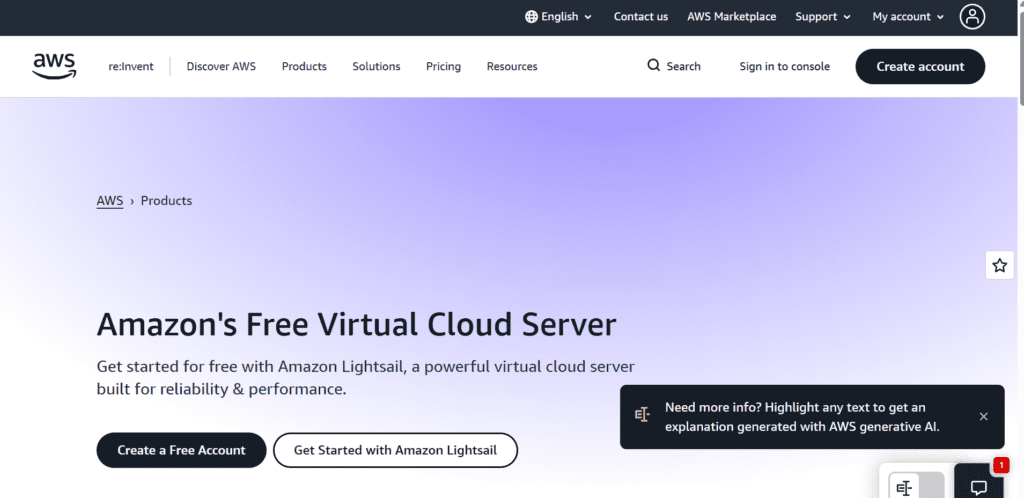
AWS Lightsail is Amazon’s simplified cloud hosting service, designed for users who want cloud reliability without deep technical complexity.
Key Features
- Fixed monthly pricing
- Built on AWS infrastructure
- SSD storage
- Easy scaling options
- Supports WordPress, Node.js, and more
Real-World Experience
Lightsail provides excellent uptime and consistent performance. While setup is slightly more technical than shared hosting, it offers much more control and scalability.
Pros
✔ Reliable AWS infrastructure
✔ Predictable pricing
✔ Good scalability
Cons
✖ Requires basic server knowledge
✖ No traditional shared hosting interface
Best For
- Developers starting with cloud
- SaaS MVPs
- Growing applications
Verdict: A great stepping stone from shared hosting to full cloud infrastructure.
5.) DigitalOcean – Best for Developers & Scalable Projects
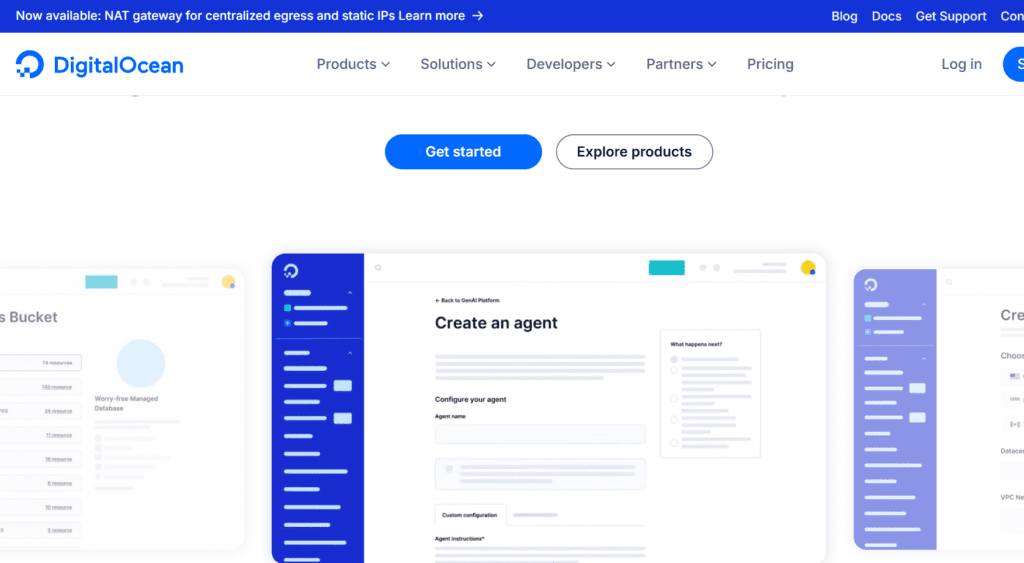
DigitalOcean is a developer-focused cloud platform known for speed, scalability, and flexibility. It’s widely used for SaaS products, APIs, and high-performance web apps.
Key Features
- High-performance SSD servers
- Global data centers
- Kubernetes & managed databases
- Simple pricing model
- Strong developer community
Real-World Experience
DigitalOcean offers blazing-fast performance and complete control over server environments. However, it requires technical expertise and is not ideal for beginners.
Pros
✔ Excellent performance
✔ Highly scalable
✔ Transparent pricing
Cons
✖ Not beginner-friendly
✖ Requires server management skills
Best For
- Developers
- SaaS products
- High-traffic or custom apps
Verdict: A powerful hosting solution for users who want full control and scalability.
Pricing Comparison
| Hosting | Starting Price | Notes |
| Bluehost | ₹199.00/mo | Shared, simple setup |
| SiteGround | ₹270.00/mo | Renewal higher |
| Hostinger | ₹180.00/mo | Extremely budget |
| AWS Lightsail | ₹205.00/mo | Cloud starter |
| DigitalOcean | ₹330.00/mo | VPS/cloud servers |
Final Verdict
There is no single “best” hosting platform for everyone. The right choice depends on your experience level, budget, and growth plans.
- Bluehost – Best for beginners
- SiteGround – Best premium WordPress hosting
- Hostinger – Best budget performance
- AWS Lightsail – Best beginner cloud hosting
- DigitalOcean – Best for developers and scalability
Choosing wisely at the start can save time, money, and future migration headaches.

Please Share