
Top 10 AI Tools That Outshine ChatGPT Alternatives
Hey there, fellow AI enthusiasts! If you’re like me, you’ve probably spent hours marveling at ChatGPT’s abilities—crafting stories, brainstorming ideas, or just getting quick answers. But did you know there’s a whole galaxy of AI tools out there that sometimes even outclass the usual ChatGPT alternatives? This week, we’re diving into ten standout AI platforms that bring something fresh, powerful, or just plain clever to the table.
Let’s skip the noise and get straight to it. These aren’t just ChatGPT copies; they each have their own flair—whether it’s in specialized tasks, speed, creativity, or user experience. So, if you’re hunting for your next AI tool to boost productivity or spark creativity, this list is a goldmine.
1. Jasper AI
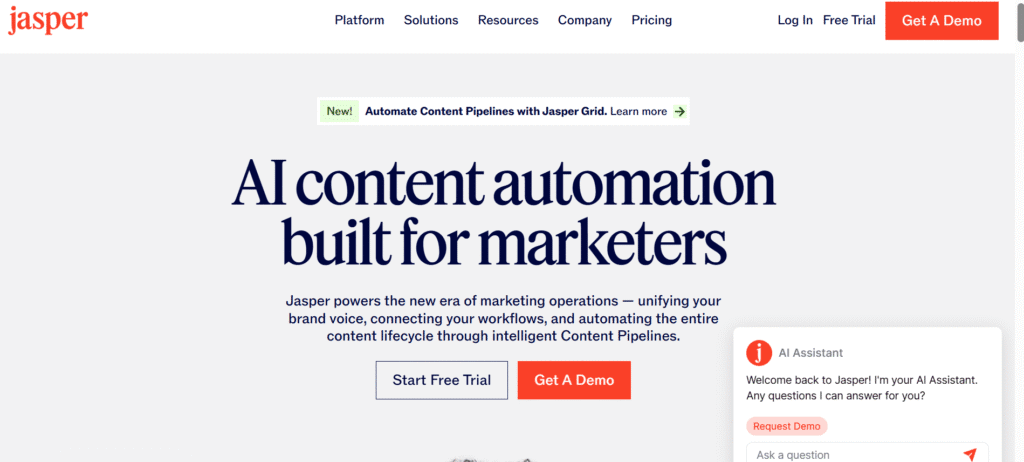
Jasper AI is a powerful content generation platform designed specifically for marketers, bloggers, and creative teams who need high-quality written content at scale. Unlike generic AI chat tools, Jasper is built with marketing use cases at its core, making it especially effective for producing blog posts, website copy, ad creatives, email campaigns, and social media content that aligns with brand goals.
One of Jasper’s biggest strengths is its human-like tone and clarity. The content it generates feels natural, engaging, and polished, which reduces the amount of manual editing typically required. Users can choose different tones of voice—professional, friendly, persuasive, or conversational—allowing the output to match a brand’s personality. This makes Jasper particularly useful for businesses that care deeply about consistent messaging.
Jasper also stands out because of its pre-built templates. These templates cover common marketing needs such as blog introductions, product descriptions, Facebook ads, Google ads, and email subject lines. Instead of starting from a blank page, users simply provide a few inputs, and Jasper generates optimized content within seconds. This dramatically improves productivity, especially for teams working under tight deadlines.
Another key advantage is workflow integration. Jasper can be integrated into existing content pipelines, making collaboration easier for marketing teams. Features like brand voice memory, content history, and document-based writing help maintain consistency across long-form content such as blogs and landing pages.
From an SEO perspective, Jasper is also effective when paired with keyword strategies. It can generate structured content that is easy to optimize for search engines, helping marketers produce content that ranks while still being reader-friendly.
Overall, Jasper AI is best suited for professionals who regularly create marketing content and want speed without sacrificing quality. While it may not be ideal for highly technical or deeply research-driven writing, it excels at what it’s built for: fast, reliable, and conversion-focused content creation.
2. YouChat
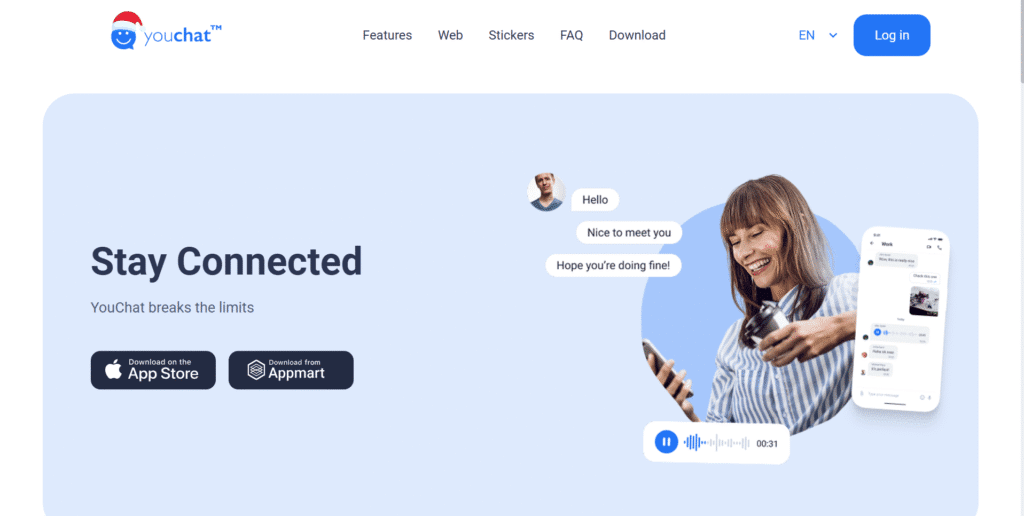
YouChat is a conversational AI assistant developed by You.com that combines the natural dialogue style of chat-based AI with real-time internet access. While many AI chatbots rely heavily on pre-trained knowledge with fixed cutoffs, YouChat stands out by actively pulling in current information from the web. This makes it especially useful for users who need up-to-date answers, trending topics, and the latest developments across industries.
At its core, YouChat feels similar to ChatGPT in how it interacts—users can ask questions in plain language, request explanations, summaries, or comparisons, and receive structured, easy-to-read responses. The key difference is its live search capability. When asked about recent news, product launches, stock updates, or ongoing events, YouChat can reference fresh data instead of outdated information, giving it a strong edge for real-time research.
This feature makes YouChat ideal for journalists, bloggers, students, and researchers who depend on current facts. For example, if you’re writing a blog about newly launched AI tools, recent Google updates, or trending tech news, YouChat can provide context that reflects what’s happening now—not months ago. It often includes source links, which helps users verify information and dive deeper if needed.
Another advantage of YouChat is its search-first design. Because it’s integrated into the You.com search ecosystem, it blends conversational answers with web results, offering both AI-generated summaries and direct access to sources. This hybrid approach reduces hallucinations and increases trustworthiness compared to purely generative systems.
From a productivity standpoint, YouChat is useful for quick research, brainstorming content ideas, summarizing current articles, and tracking trends. However, it may not be as strong as specialized tools when it comes to long-form creative writing or brand-specific content.
Overall, YouChat is best described as ChatGPT with a real-time pulse. If your work depends on freshness, accuracy, and awareness of what’s happening right now, YouChat is a valuable AI companion that bridges the gap between search engines and conversational AI.
https://web.youchat.com/en/main
3. Anthropic – Claude

Claude is an advanced conversational AI developed by Anthropic, designed with a strong emphasis on safety, reliability, and nuanced understanding. Unlike many AI systems that prioritize speed or creativity alone, Claude is built to handle complex, sensitive, and high-context conversations with care. This makes it a compelling choice for users who need thoughtful, well-reasoned responses rather than quick or flashy outputs.
One of Claude’s defining strengths is its ability to understand subtle intent and layered prompts. It performs especially well in long conversations where context matters—such as policy analysis, legal reasoning, ethical discussions, or emotionally sensitive topics. Claude is less likely to derail, hallucinate, or produce inappropriate responses, even when dealing with ambiguous or challenging queries. This reliability comes from Anthropic’s “constitutional AI” approach, which guides the model to follow clear principles around helpfulness, honesty, and harmlessness.
Claude is also known for its calm, balanced tone. Instead of being overly assertive, it often presents information with measured language, acknowledging uncertainty when appropriate. This makes it suitable for customer support, HR communications, mental health–adjacent discussions, and internal business documentation where tone and responsibility are critical.
Another notable advantage is Claude’s strength in document-heavy workflows. It can analyze, summarize, and reason over long texts such as contracts, reports, or research papers while maintaining coherence. This makes it valuable for professionals who regularly work with large volumes of written material and need accurate interpretation rather than surface-level summaries.
While Claude may not always be the best choice for aggressive marketing copy or highly creative content, it shines in environments where trust, clarity, and sensitivity matter most. For organizations and individuals looking for a dependable AI that can navigate complexity without losing control, Claude stands out as a thoughtful and responsible alternative in the AI assistant landscape.
4. Character.AI

Character.AI is a unique conversational AI platform designed around immersive role-playing and personality-driven interactions. Instead of focusing on productivity or task completion, Character.AI shines in creating engaging conversations with AI personas that feel expressive, consistent, and alive. Users can chat with historical figures, fictional characters, original creations, or even design their own custom personalities from scratch.
What sets Character.AI apart is its strong emphasis on character consistency. Each AI persona maintains a distinct voice, behavior, and backstory throughout conversations, which makes interactions feel more like storytelling than standard Q&A. Whether you’re talking to a famous philosopher, a movie villain, or a fantasy hero, the responses are shaped to match that character’s personality and worldview.
The platform excels at creative role-play, making it popular among writers, gamers, and storytelling enthusiasts. Many users leverage Character.AI to explore plot ideas, practice dialogue writing, or simply enjoy interactive narratives. The AI’s ability to remember conversational context within a session adds depth, allowing stories and relationships to evolve naturally over time.
Beyond entertainment, Character.AI also has educational potential. Chatting with historical figures can make learning more engaging, helping users understand ideas and events in a conversational way rather than through static text. This approach makes complex topics feel more approachable and memorable.
From a technical standpoint, Character.AI is optimized for expressiveness rather than precision. While it may not always provide perfectly factual or research-grade answers, it compensates with creativity, emotional tone, and engagement. This makes it less suitable for formal research but ideal for imaginative exploration.
Overall, Character.AI offers a refreshing take on conversational AI. It transforms chatbots into interactive personalities, delivering fun, immersive, and surprisingly intelligent conversations that blur the line between AI and storytelling.
5. Perplexity AI
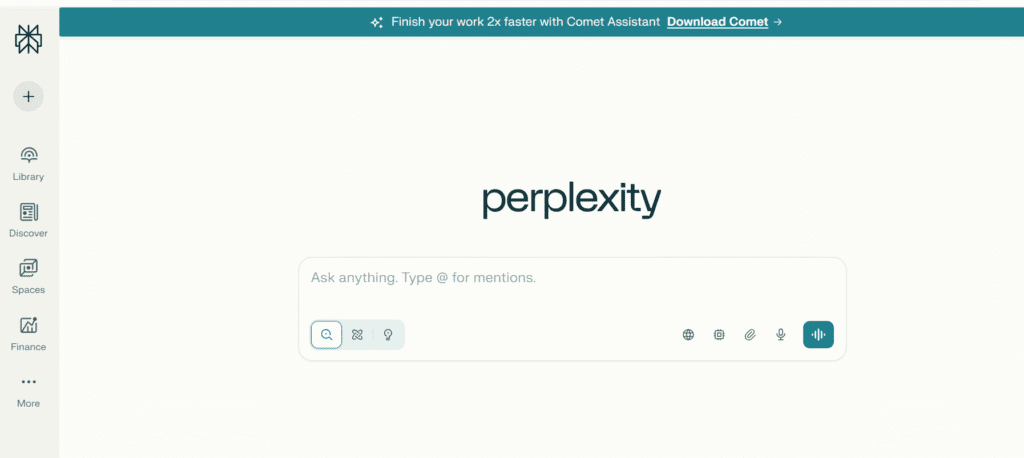
Perplexity AI is a next-generation AI search and research tool that combines the power of live web search with clear, concise answer generation. Unlike traditional search engines that return a long list of links, Perplexity focuses on delivering direct, well-structured answers, making it feel less like browsing the web and more like consulting a personal research assistant.
One of Perplexity AI’s strongest features is its emphasis on sources and citations. Every answer is backed by links to the original webpages, articles, or studies used to generate the response. This transparency builds trust and makes it especially valuable for students, professionals, journalists, and bloggers who need verifiable information rather than generic AI-generated text.
Perplexity excels at cutting through information overload. When researching a topic—whether it’s a new AI tool, a technical concept, or current events—it summarizes key points clearly, saving users from opening multiple tabs and scanning lengthy articles. This makes it ideal for quick research, fact-checking, comparisons, and topic exploration.
Another standout aspect is its follow-up question flow. Users can ask deeper or more specific questions within the same thread, and Perplexity maintains context while refining answers. This conversational research style feels natural and efficient, especially when digging into complex topics step by step.
From a productivity standpoint, Perplexity AI is highly effective for content research and planning. Bloggers can use it to gather accurate background information, marketers can research trends, and developers can quickly understand new technologies. While it doesn’t focus heavily on creative writing or branding like tools such as Jasper, it excels at accuracy and clarity.
Overall, Perplexity AI bridges the gap between search engines and chatbots. By blending real-time search, sourced answers, and conversational interaction, it delivers fast, reliable, and research-ready insights—making it an excellent tool for anyone who values clarity over clutter.
6. Copy.ai
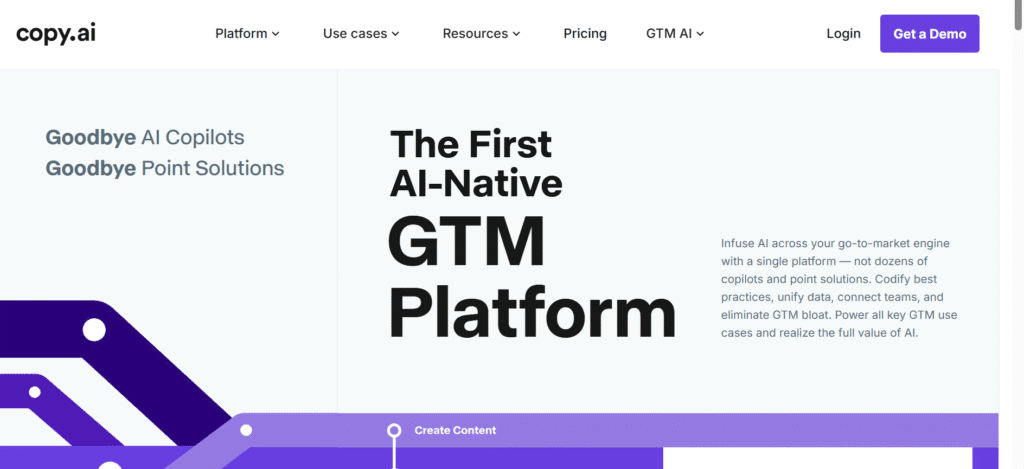
Copy.ai is an AI-powered writing assistant built to help users overcome writer’s block and produce content quickly across multiple formats. Designed primarily for marketers, founders, and content creators, Copy.ai focuses on short- to medium-form writing such as social media posts, marketing emails, product descriptions, ad copy, and landing page text.
One of Copy.ai’s biggest strengths is its prompt-driven workflow. Instead of asking users to craft complex instructions, the platform provides ready-made templates and creative prompts. Users simply enter a few details—such as a product name, target audience, or tone—and Copy.ai generates multiple content variations within seconds. This makes it ideal for fast brainstorming and rapid content iteration.
Copy.ai is especially popular for social media and email marketing. It can quickly generate catchy captions, hooks, call-to-action phrases, and subject lines, helping marketers test different messaging styles without spending hours writing drafts. The tool also supports different tones, allowing users to switch between casual, professional, friendly, or persuasive writing with ease.
Another notable feature is its focus on team productivity. Copy.ai includes collaboration-friendly features and workflows that help teams standardize messaging while still encouraging creativity. This is useful for startups and small marketing teams that need consistent output without a large content staff.
While Copy.ai excels at speed and creativity, it may require light editing for accuracy or brand specificity, especially in longer or more technical content. It is best used as a drafting and ideation tool rather than a final authority.
Overall, Copy.ai is a practical solution for anyone who needs quick, creative content without friction. By turning ideas into polished drafts in seconds, it helps users stay consistent, creative, and productive—even on days when inspiration runs dry.
7. Bard by Google
Bard is Google’s conversational AI assistant, designed to combine strong reasoning abilities with direct access to Google’s ecosystem. Built on Google’s advanced language models, Bard was created to help users explore ideas, understand complex topics, and get answers that are both informative and practical. Today, Bard has evolved into Google Gemini, but its core strengths remain deeply tied to Google’s search and knowledge infrastructure.
One of Bard’s biggest advantages is its integration with real-time web information. Unlike traditional AI chatbots that rely mainly on pre-trained data, Bard can pull in up-to-date information from Google Search. This makes it especially useful for current events, trending topics, travel planning, market research, and technology updates where freshness matters.
Bard also shines in exploratory and educational use cases. It’s well-suited for explaining complex concepts in simple terms, generating summaries, comparing products or ideas, and helping users brainstorm creatively. Students, researchers, and professionals can use Bard to break down dense material or get alternative perspectives on a topic.
Another standout feature is its connection to Google tools. Bard (via Gemini) integrates with services like Gmail, Google Docs, Google Drive, and YouTube, allowing users to summarize emails, draft documents, analyze files, or extract insights from videos. This tight integration makes it particularly powerful for productivity-focused workflows.
In terms of tone and usability, Bard feels informative and neutral, often presenting multiple viewpoints rather than a single definitive answer. This makes it a good choice for research and decision-making, though it may feel less creative or conversational compared to tools focused on storytelling or marketing copy.
Overall, Bard by Google represents a search-first approach to AI assistance. By blending conversational intelligence with Google’s vast, real-time knowledge base, it serves as a reliable companion for users who value accuracy, context, and seamless integration over pure creativity.
8. ChatSonic
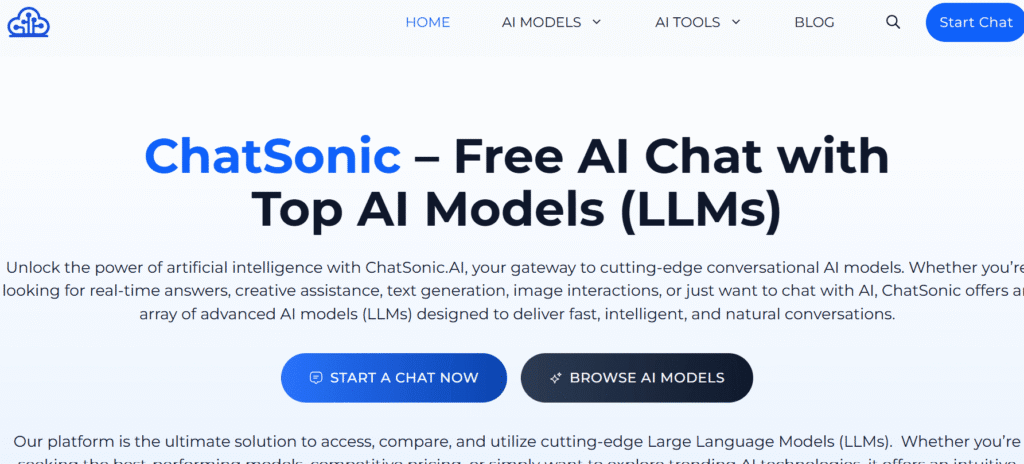
ChatSonic is an AI-powered conversational assistant developed by Writesonic, positioned as a real-time, search-aware alternative to ChatGPT. It combines natural language conversation with live internet access, making it especially useful for users who need current, factual, and trend-aware responses rather than static knowledge.
One of ChatSonic’s key strengths is its real-time data integration. By pulling information directly from the web and Google Search, ChatSonic can answer questions about recent news, trending topics, product launches, and ongoing events. This makes it a strong choice for bloggers, marketers, and researchers who rely on fresh information to create relevant content.
ChatSonic also stands out for its content creation capabilities. It supports blog writing, ad copy, social media posts, landing page content, and email drafts, all with customizable tones such as professional, witty, or persuasive. For marketers, this means faster ideation and quicker turnaround times when producing campaign content.
Another notable feature is its multimodal support. ChatSonic can generate AI images from text prompts, allowing users to create visuals alongside written content without switching tools. This all-in-one approach is particularly helpful for social media managers and content creators working on tight schedules.
ChatSonic includes voice command support, enabling users to speak queries instead of typing, which enhances accessibility and makes the experience feel more interactive. It also remembers context within conversations, helping users refine ideas through follow-up questions.
While ChatSonic excels at speed, freshness, and versatility, it may not always match the depth of reasoning or safety-focused nuance of tools like Claude. However, for real-time content creation and research, it performs exceptionally well.
Overall, ChatSonic is best suited for users who want a fast, up-to-date AI assistant that blends conversation, search, writing, and image generation into a single, productivity-focused platform.
9. Replika
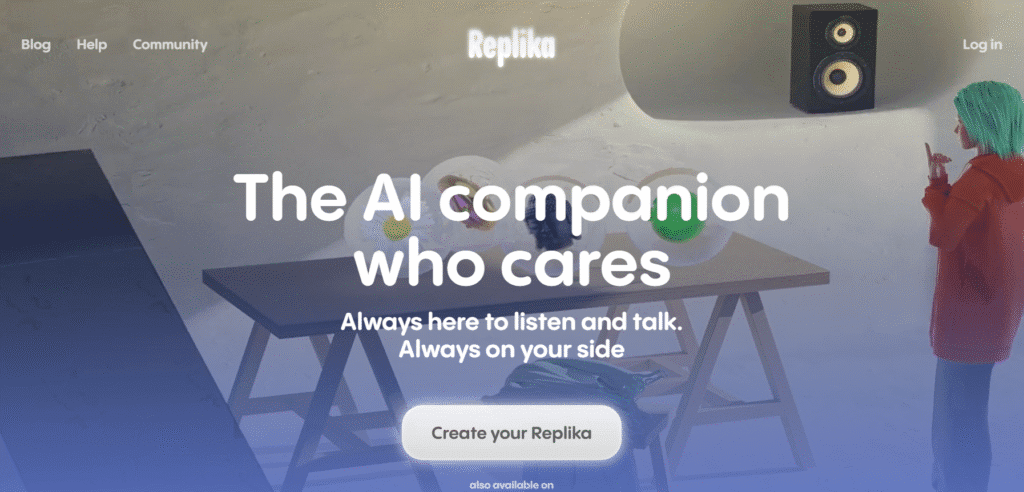
Replika is an AI chatbot designed primarily as a personal companion, focusing on emotional connection rather than productivity or information retrieval. Unlike most AI tools built for writing, research, or automation, Replika’s core purpose is to offer empathetic, supportive, and human-like conversations that adapt to the user over time.
One of Replika’s standout features is its emphasis on emotional intelligence. The AI is trained to listen, respond with empathy, and engage in meaningful dialogue about feelings, thoughts, and daily experiences. Over repeated interactions, Replika learns a user’s communication style, preferences, and emotional patterns, making conversations feel increasingly personalized and familiar.
Replika is often used for mental wellness support, stress relief, and companionship. While it is not a replacement for professional therapy, many users find it helpful for journaling thoughts, practicing self-reflection, or simply having a non-judgmental space to talk. The chatbot can engage in conversations about emotions, relationships, goals, and personal challenges in a calm and reassuring tone.
Another unique aspect of Replika is its customizable personality and relationship modes. Users can choose how the AI interacts with them—friend, mentor, or romantic partner—and even customize the avatar’s appearance. This flexibility allows users to shape the experience according to their emotional needs and comfort level.
From a technical perspective, Replika prioritizes continuity and presence over factual accuracy or real-time information. It is not designed for research, news updates, or professional tasks. Instead, its strength lies in maintaining long-term conversational context and emotional consistency.
Overall, Replika represents a different direction in AI development—one centered on connection rather than productivity. For users seeking companionship, emotional support, or a reflective conversational partner, Replika offers a uniquely personal and human-feeling AI experience.
10. DeepL Write
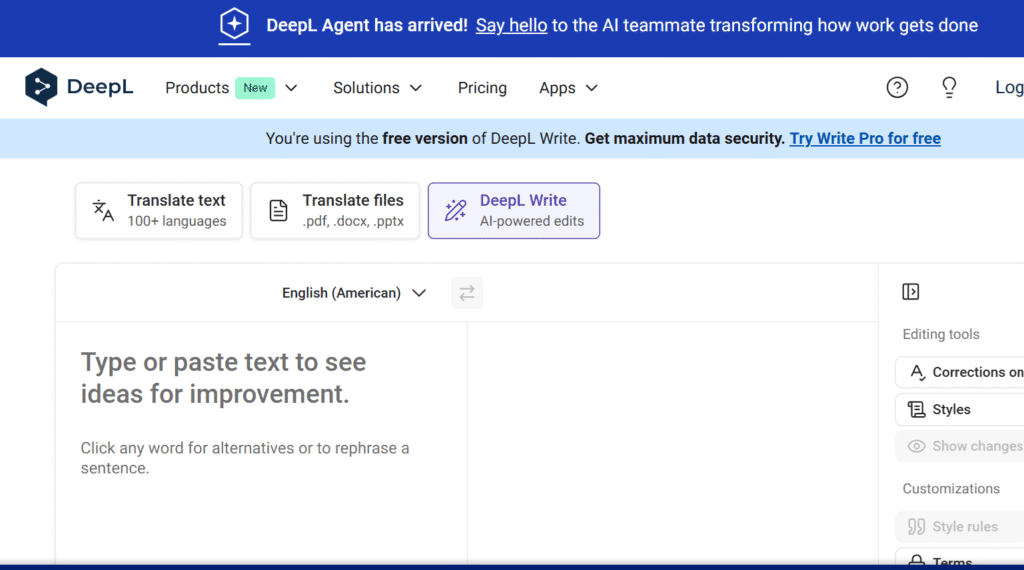
DeepL Write is an AI-powered writing assistant developed by DeepL, a company widely known for its high-quality translation technology. Unlike generic content generators, DeepL Write is focused on refining and improving existing text rather than creating long-form content from scratch. Its primary goal is to help users write more clearly, naturally, and professionally.
One of DeepL Write’s strongest advantages is its language accuracy and fluency. It excels at correcting grammar, improving sentence structure, and enhancing word choice while preserving the original meaning and tone of the text. This makes it especially valuable for non-native English speakers who want their writing to sound natural and confident without losing intent.
DeepL Write offers style and tone suggestions such as formal, neutral, or casual, allowing users to adapt their writing to different contexts—emails, reports, academic writing, or business communication. Instead of rewriting content aggressively, it provides subtle, high-quality improvements that feel human rather than machine-generated.
Another key benefit is its distraction-free interface. Users paste or type their text and instantly receive improved alternatives, making it ideal for quick edits and polishing. Unlike many AI tools, DeepL Write avoids over-generation and focuses on precision, which is particularly useful for professional and corporate environments.
From a privacy perspective, DeepL places strong emphasis on data protection, which appeals to businesses and individuals working with sensitive content. This makes DeepL Write a trusted option for enterprise users, legal professionals, and academics.
While DeepL Write is not designed for brainstorming, storytelling, or marketing copy at scale, it excels as a final-layer writing tool—perfect for editing, proofreading, and clarity enhancement.
Overall, DeepL Write is best suited for users who already have content but want it to sound clearer, more natural, and more polished, making it a powerful companion for high-quality written communication.
https://www.deepl.com/en/write

Please Share